

At the same time, you can add a credit of $20,000 to your liabilities because the loan represents a sum of money that is owed to another party and must eventually be paid back. Double-entry accounting is a method of accounting that makes simultaneous entries in two different accounts to balance debits and credits. Double-entry accounting helps to ensure accuracy and highlight errors in cash flow business accounts. The total debits and credits in an accounting system must always be equal just like the equation itself. Double-entry accounting records every transaction with two parts—debit and credit—to keep financial statements accurate and balanced. This concept represents a system of bookkeeping in which every financial transaction is recorded in at least two accounts.
Income statement
For example, if a business purchases office supplies for $500 in cash, it will record a $500 debit to the Supplies account and a $500 credit to the Cash account. Double-entry accounting minimizes errors by requiring both sides of a transaction to be recorded. By balancing debits and credits, discrepancies are easier to spot, ensuring that financial statements are accurate and reliable. Double-entry accounting is a system of bookkeeping where every financial transaction is recorded in at https://www.sivenson.com/innovations-and-impact-of-blockchain-on-the/ least two accounts. A double-entry system provides a check and balance for each transaction, which helps ensure accuracy and prevent fraud.
Fundamentals of Double Entry Accounting
- Accountants use double entry bookkeeping to ensure that every transaction is recorded accurately.
- Numerous double-entry accounting software options are available that automate much of the process.
- It ensures that every transaction’s impact is recorded in a balanced manner, maintaining the equilibrium of the accounting equation.
- GAAP insists on the principle that for every debit, there must be an equal credit, which is fundamental to the checks and balances system in accounting.
A digital wallet (also sometimes called an electronic wallet) is an application that securely stores digital payment information and password data for a user. If you want your business to be taken seriously—by investors, banks, potential buyers—you should be using double-entry. Get free guides, articles, tools and calculators to help you navigate the financial side of your business with ease. The magic happens when our intuitive software and real, human support come together. Despite a comprehensive approach and several benefits, the double-entry system also comes with some disadvantages.
What is Included in the Double Entry Accounts?

In this case, you would record the transaction with a debit to the Cash account (increasing cash) and a credit to the Sales Revenue account (increasing revenue). Both sides of the transaction will balance, maintaining the equality of debits and credits. By its very nature, double-entry accounting is an accounting system that encourages – in fact, demands – high levels of accuracy. Businesses can better track income and expenses with every transaction being recorded in at least two accounts. This accuracy also allows for better accountability, which helps establish trust across the company. They will either decrease the asset and expense accounts or increase the revenue, equity, and liability accounts.
- Let us understand the differences between double entry accounting and single-entry accounting through the comparative table below.
- This method reflects the dual nature of transactions, where every entry has a corresponding and opposite entry in another account, maintaining balance in the accounting equation.
- This simpler method is often used by small businesses or sole proprietors who may not have complex financial activities.
- Better management of financial resources is a significant advantage of double-entry bookkeeping, as it provides businesses with a clear and organized view of their financial activities.
- Recording transactions and keeping financial records are an essential part of owning a business.
- When you pay for operating costs such as salaries, rent, or utilities, you debit those accounts.
Transactions are recorded according to these norms to ensure proper classification and balance. By applying the Double-Entry System in Finance and Accounting, businesses maintain financial accuracy, ensure compliance with accounting standards, and make informed financial decisions. The next section will explore its advantages and why it’s essential for businesses.

It ensures that the balance sheet—a snapshot of a company’s financial condition—accurately represents the position of assets, liabilities, and equity at a given point in time. The credibility of financial reporting hinges on this equation, as it introduces a systematic approach to double-entry bookkeeping, allowing for consistency and verification of financial data. It provides several benefits, such as accuracy, error detection, and support for financial statement preparation and decision-making. With its accurate and up-to-date financial information, double entry accounting provides valuable insights for decision-making.
Debits and Credits in Action
It serves as a cautionary tale about the consequences of corporate greed, inadequate oversight, and the critical importance of maintaining ethical and transparent financial practices. A ledger API allows companies who need to move money at scale quickly and easily access, track, audit, and unify all of their financial data in one place. A chart of accounts (COA) is an index of all the different accounts within a company’s ledger.

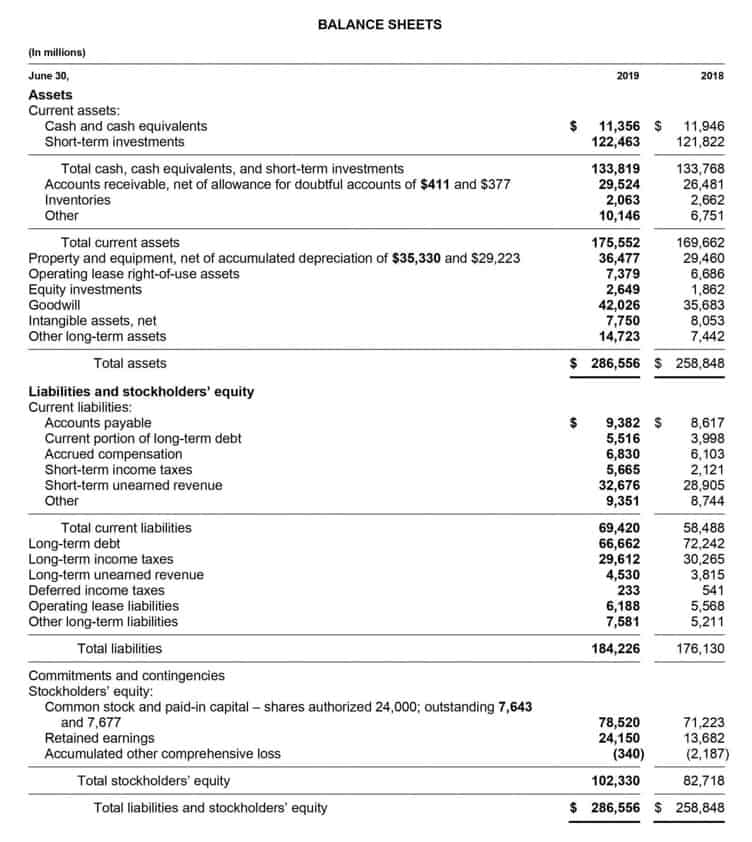
It is also essential to follow a systematic approach when recording transactions, often utilizing accounting software or spreadsheets to streamline the process. Automation can enhance accuracy and efficiency, reducing the risk of human error. Regular reviews of recorded transactions help ensure that all entries are complete and correctly categorized, further supporting the integrity of financial records. By adhering to these golden rules, accountants can maintain a systematic approach to recording transactions.
Accuracy and completeness 🔗
Yes, you can do it on your own using a journal and ledger if you prefer not to use one of the many tax and accounting services. Double-entry bookkeeping is integral to an effective accounting system, and dedicated accountants are instrumental in its implementation and ongoing maintenance. This method equips businesses of all sizes, but notably small businesses and sole proprietors, with the tools for better financial management and decision-making.
- With the single-entry system, you record cash disbursements and cash receipts.
- Every journal entry you post increases one side of that equation and decreases the other side, so the totals stay balanced.
- These balances would be used to prepare the income statement, balance sheet, and statement of cash flows.
- However, the possibility of introducing a new dimension and making it a Triple Entry Accounting system was discussed in detail in the two-day conference.
- The symmetrical nature of double entry accounting requires consistent application of debits and credits across different account types.
- You can also divide the major accounts in accounting into different sub-accounts.
- This method contrasts with single-entry accounting, where each transaction is recorded only once, not offering the verification that double-entry does.
The total liabilities of a company represent the claims of creditors against its assets. A debit is used to record an increase in assets, expenses, and losses, and a decrease in liabilities, revenues, and gains. On the other hand, a credit is used to record an increase in liabilities, revenues, and gains, and a decrease in assets, expenses, and losses. Each accounting transaction is recorded in a minimum of two accounts, double-entry accounting one is a debit account, and another is a credit account.
Recent Comments